Kyle Phillips
Engineer & Creative · Google NYC
Teachable Machine
A fast, easy way to create machine learning models – no coding required.
November, 2019
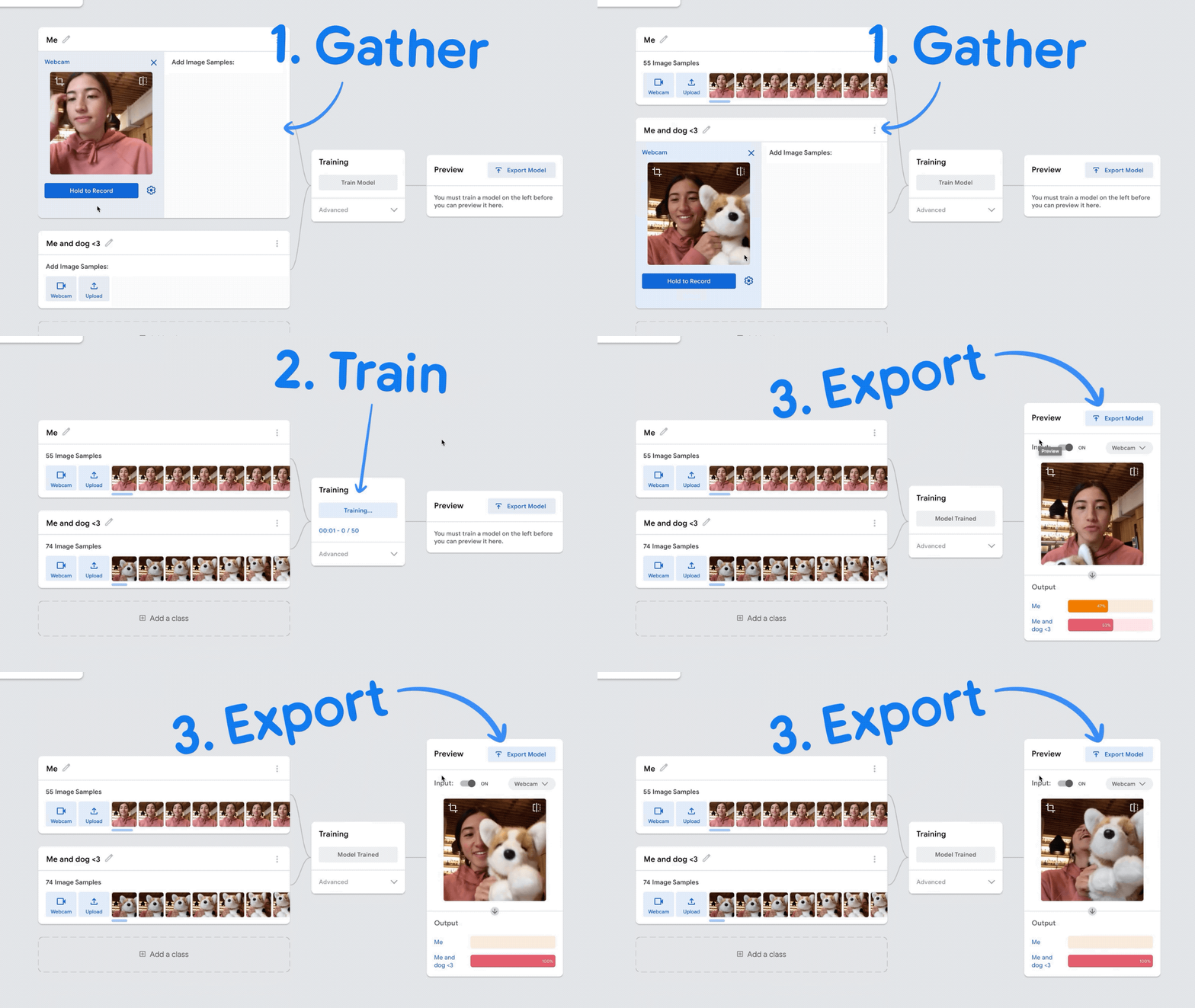
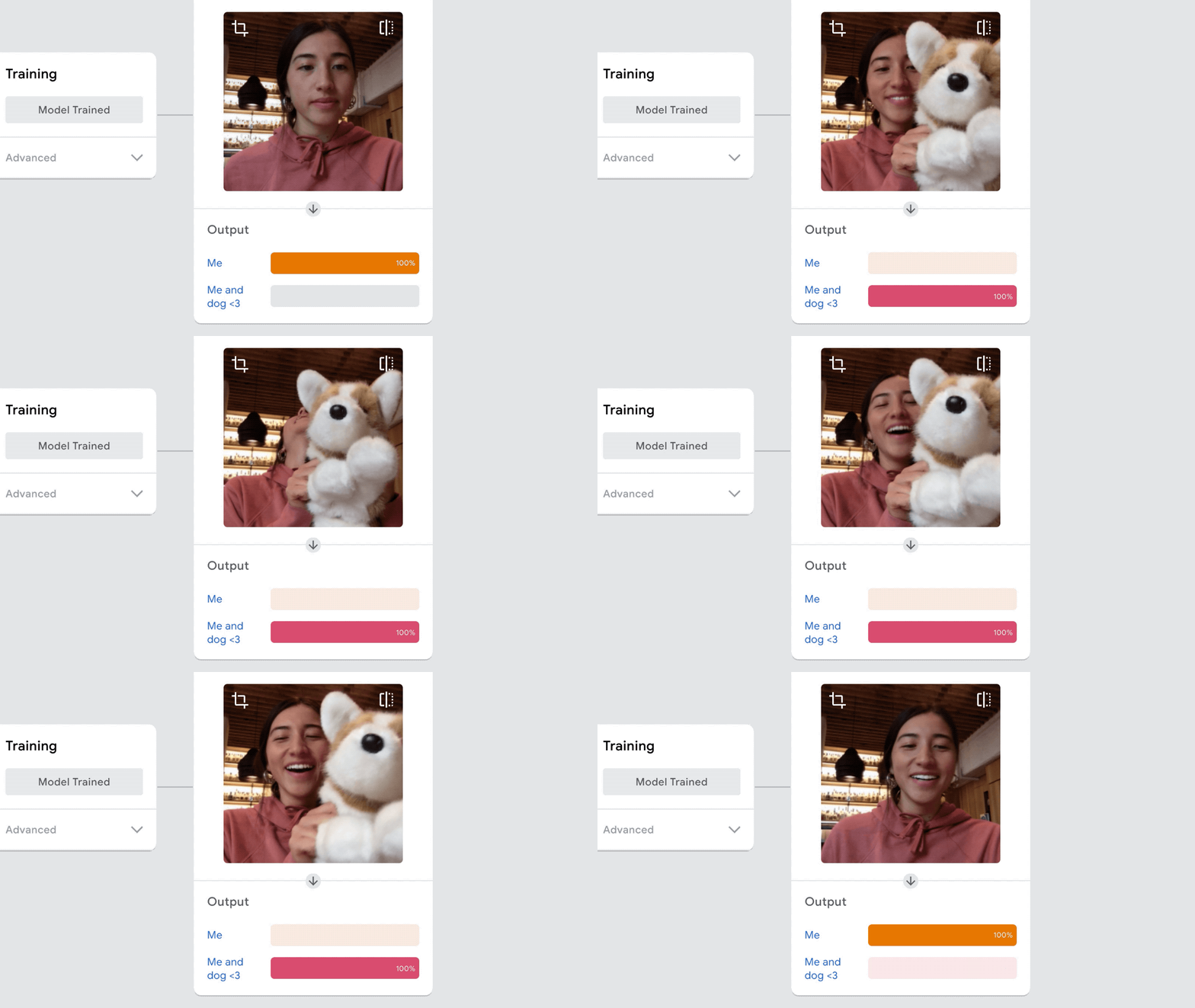
Teachable Machine is a web tool that makes it fast and easy to create machine learning models for your projects, no coding required. Train a computer to recognize your images, sounds, & poses, then export your model for your sites, apps, and more.
Teachable Machine is used in school systems across the world to teach all ages about A.I. You will find it in the curriculum of MIT (Media Lab and CSAIL) and Stanford. It is used in global politics to help train policy makers. It was a finalist for Fast Company's World Changing Ideas of 2020 and a Webby Winner for Technical Achievement.
We published an academic paper in the world's leading HCI and Interaction Design Conference, CHI titled Teachable Machine: Approachable Web-Based Tool for Exploring Machine Learning Classification and we were awarded a patent for Node-based interface for machine learning classification modeling.
Project Euphonia
Project Euphonia was announced by Sundar in the Google IO keynote in 2019. It is a Google Research initiative focused on helping people with non-standard speech be better understood. For several months, Irene Alvarado and I routinely traveled to Boston to visit the Steve Saling ALS Residence alongside developing Teachable Machine, we came prepared with prototypes and worked closely with Steve and others at the residence to invent novel accessibility tools.
My work for Project Euphonia was an integral part of Sundar's Google IO keynote.

Millions of models have been trained with Teachable Machine using transfer learning with Tensorflow.js; it remains the easiest way to introduce anyone to this technology that is shaping all of our lives. It is beyond rewarding when I am shown something created by others or am told their first introduction to AI was with Teachable Machine. There are so many projects I wish I could highlight.
- YouTube: Dan Shiffman's the Coding Train
- YouTube: Google Cloud - ML without Code
- Twitter: Nicole He's hourglass tracker
- Github: Gesture-based Instagram Liker
Teachable Machine was originally released as a part of Experiments with Google as one of Google's early A.I. Experiments.
6 References
The longer version: I'm a hands-on technical lead, responsible for architecting and building the systems that turn our ideas into reality. I'm most proud of my contributions to projects like Teachable Machine, where my primary focus was engineering the intuitive, no-code interface that has empowered millions of people to experiment with machine learning and train their own models for the first time using transfer learning. This passion for inclusivity was also the guiding force behind Creatability, a series of experiments developed in close collaboration with the disability community. For this project, I translated their needs and insights into a library of open-source web components and novel assistive interfaces, such as controlling a website through body movement using PoseNet.
- Winner, Technical Achievement – Teachable Machine (2020)
- Finalist, AI and Data – Teachable Machine (2020)
- Silver Pencil, Websites/Utility – Teachable Machine (2020)
- Bronze Pencil, Innovation in Interactive – Teachable Machine (2020)
It runs through several pieces of my work. Teachable Machine uses Tensorflow.js for in-browser transfer learning, letting anyone train a model from a webcam without writing code or sending data to a server. Creatability uses PoseNet — a Tensorflow.js model — to power the body-controlled interfaces I built with the disability community.
This quality — a display that invites collective, spontaneous authorship — connects to a thread running through much of my work: the idea that the best interfaces dissolve into the experience itself. In Teachable Machine, the complexity of machine learning disappears behind a webcam and a few examples. In Creatability, the computer fades behind body position and sound. With Anypixel, the technology behind 5,880 custom circuit boards fades behind the simple pleasure of pressing something and making it light up.
AutoDraw marked a key moment in my professional development, initiating a thread of exploration into the "interface for AI tools." This work paved the way for future projects like Teachable Machine and Creatability, where the focus remained on making complex technology feel simple, playful, and human. Today, this lineage continues in my work with multimodal LLMs and the Gemini Live Web Console, as I continue to invent future UIs for creative expression.
Infinite Wonderland continues a thread running through my work around AI as a creative amplifier — from AutoDraw's artist-drawn suggestions to Teachable Machine's trainable models, this project asked: what if a professional artist could hand their entire style to anyone? Where Teachable Machine made ML training accessible with a handful of webcam images, StyleDrop lets an artist's portfolio become a brush that anyone can paint with.