Kyle Phillips
Engineer & Creative · Google NYC
Anypixel
An open-source framework for building large-scale interactive displays from everyday objects, permanently installed in the lobby of Google's New York headquarters.
May, 2016
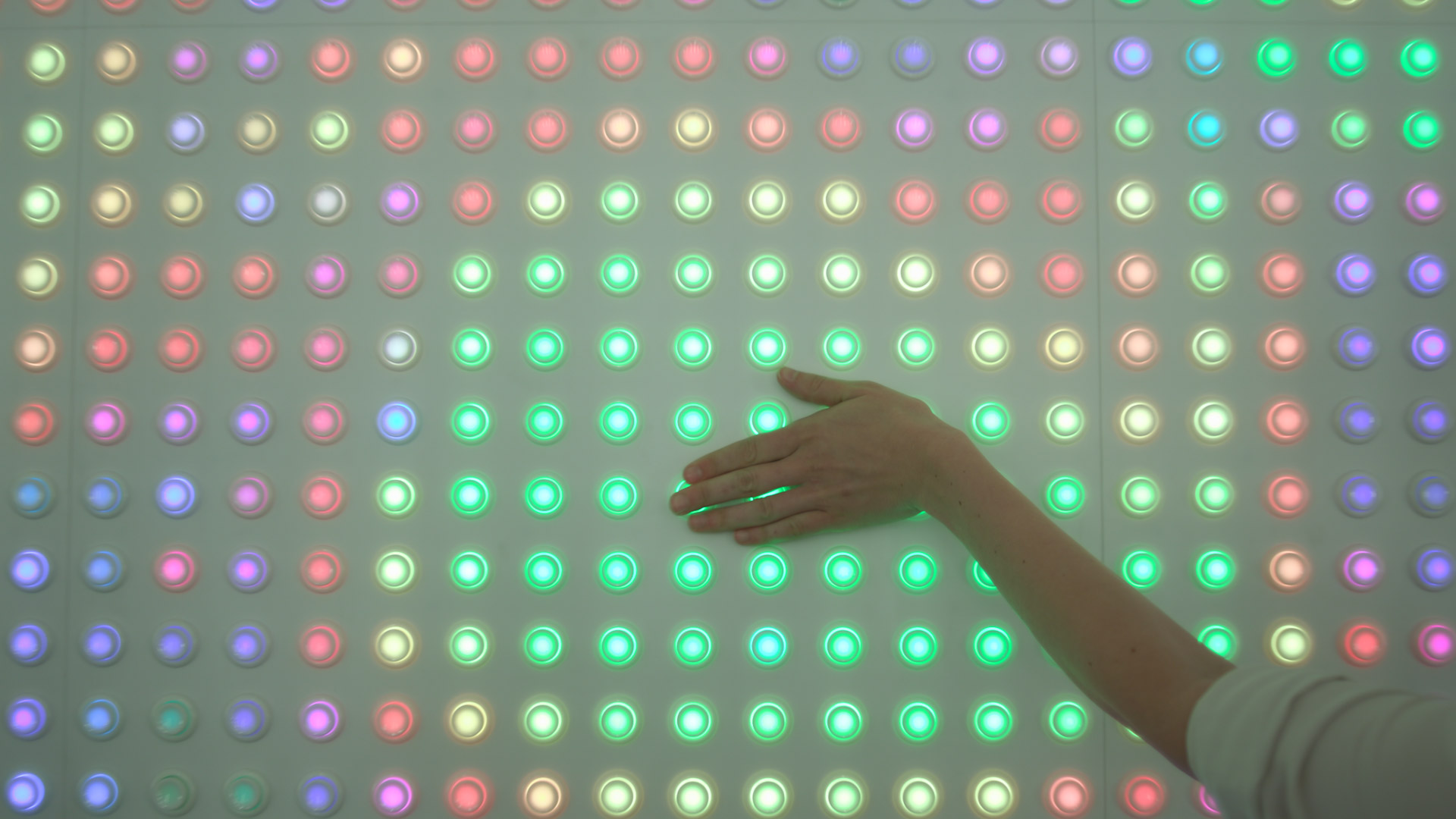
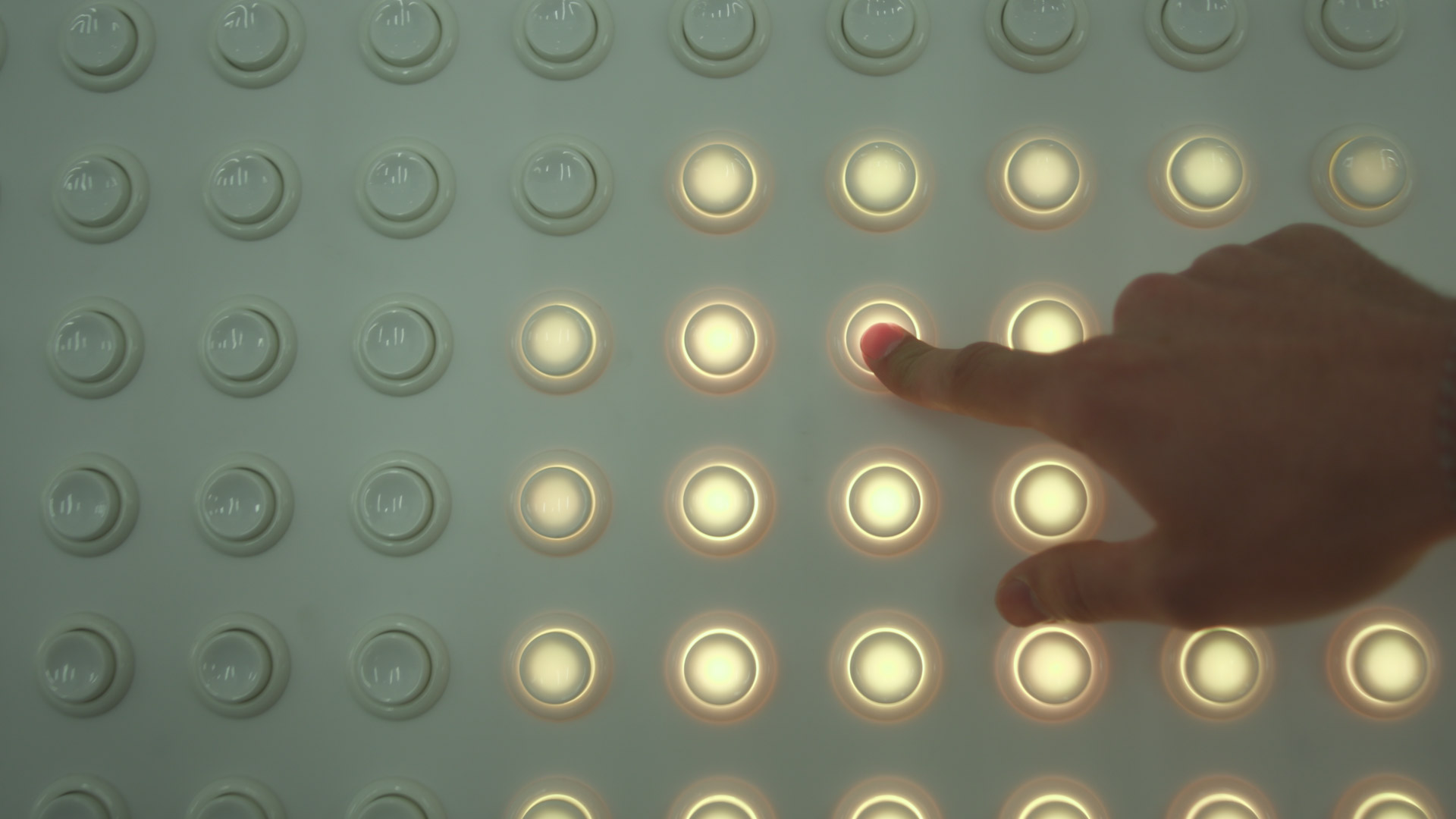
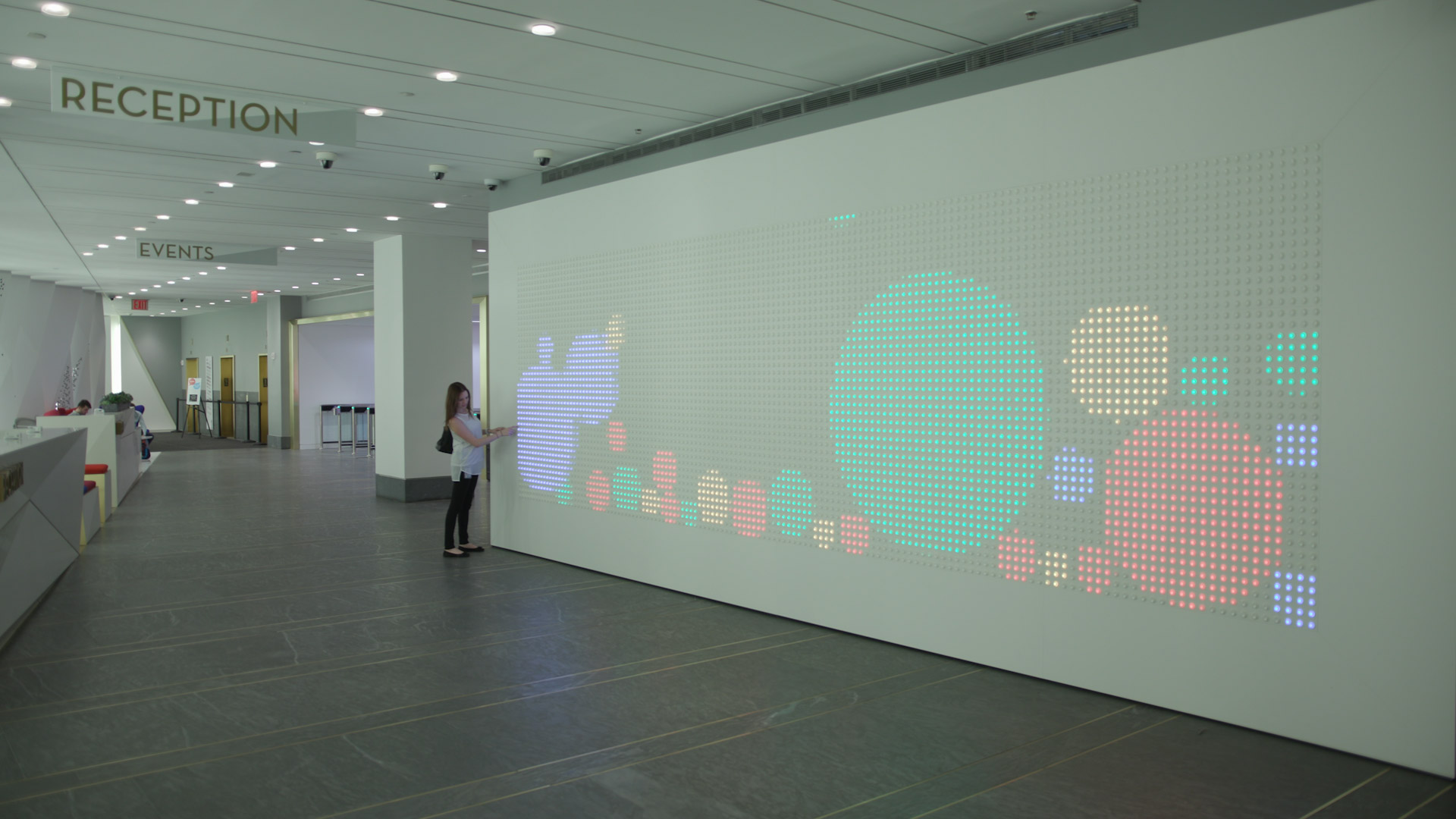
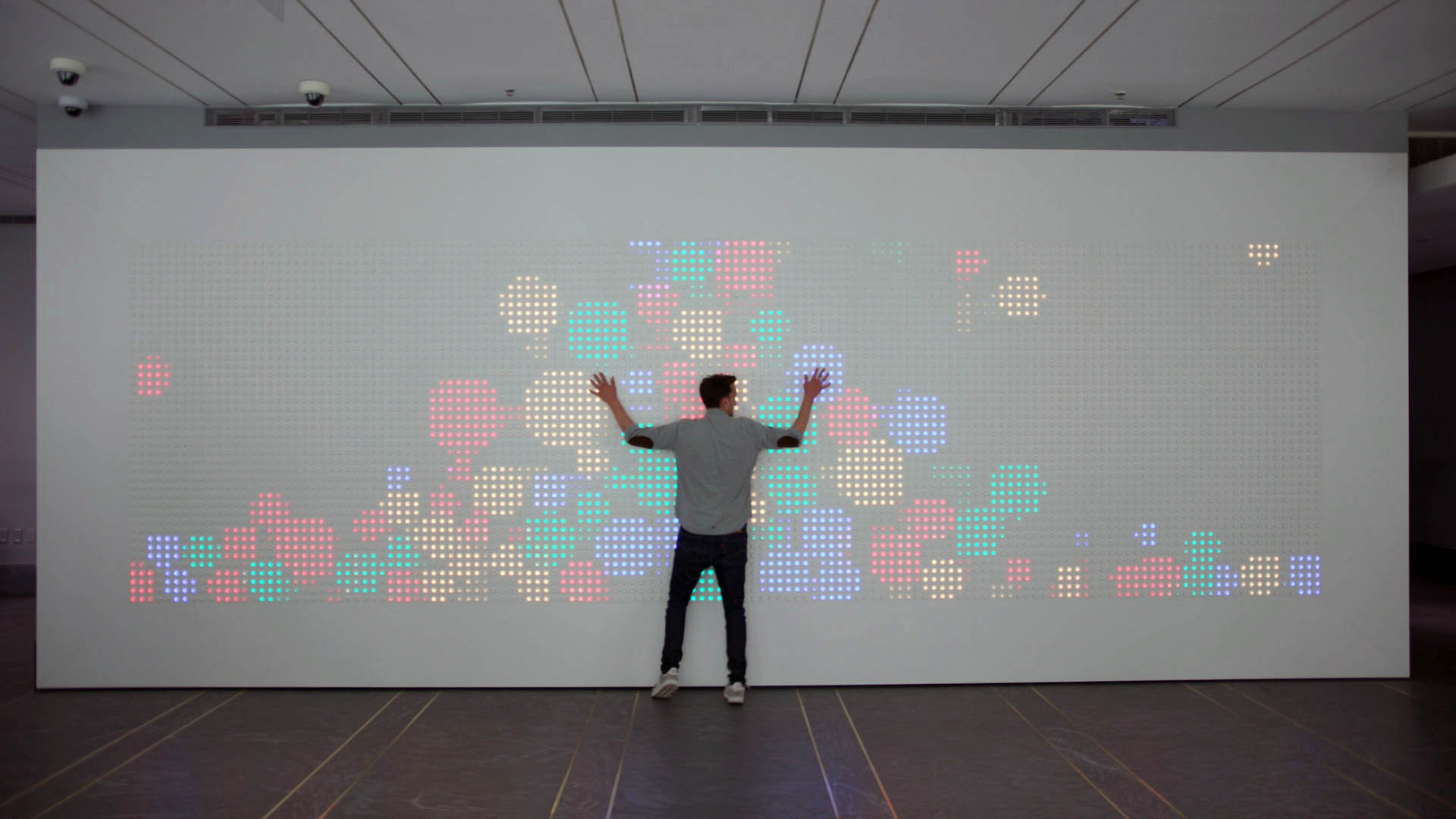
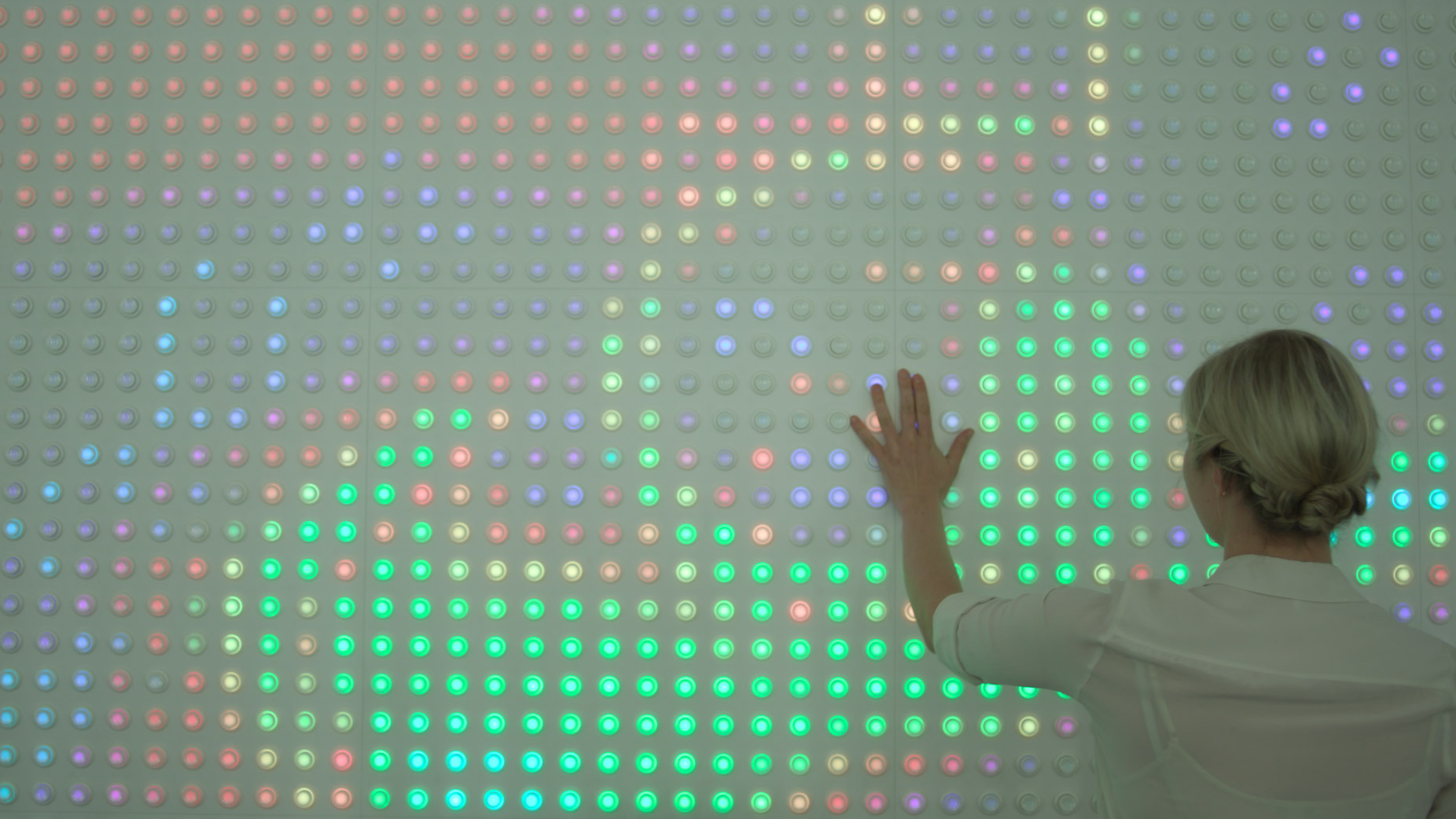
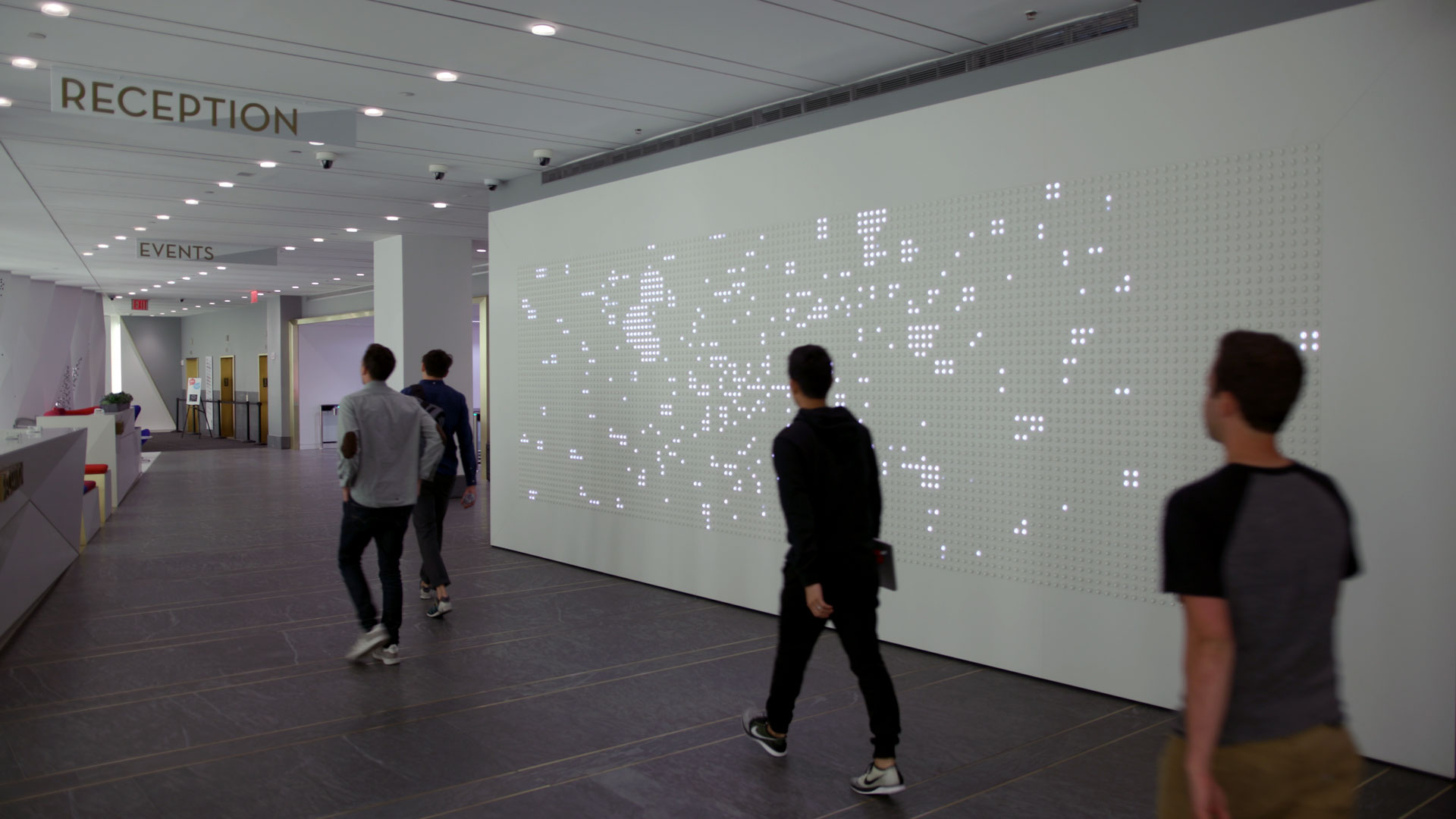
Anypixel is a permanent installation in the lobby of Google's New York headquarters at 8th Avenue — a 140-column by 42-row grid of 5,880 arcade buttons, each with a super-bright LED embedded in its core. Press a single button and it lights up triggering large-scale interactions. Together, these arcade buttons form a massive, low-resolution, multi-user, multitouch display for everyone to walk up and play with.
Rather than screens and cameras, we built pixels you could physically press — each one an arcade button, an object inviting you to play, serving as both the display unit and the controller.
The Hardware
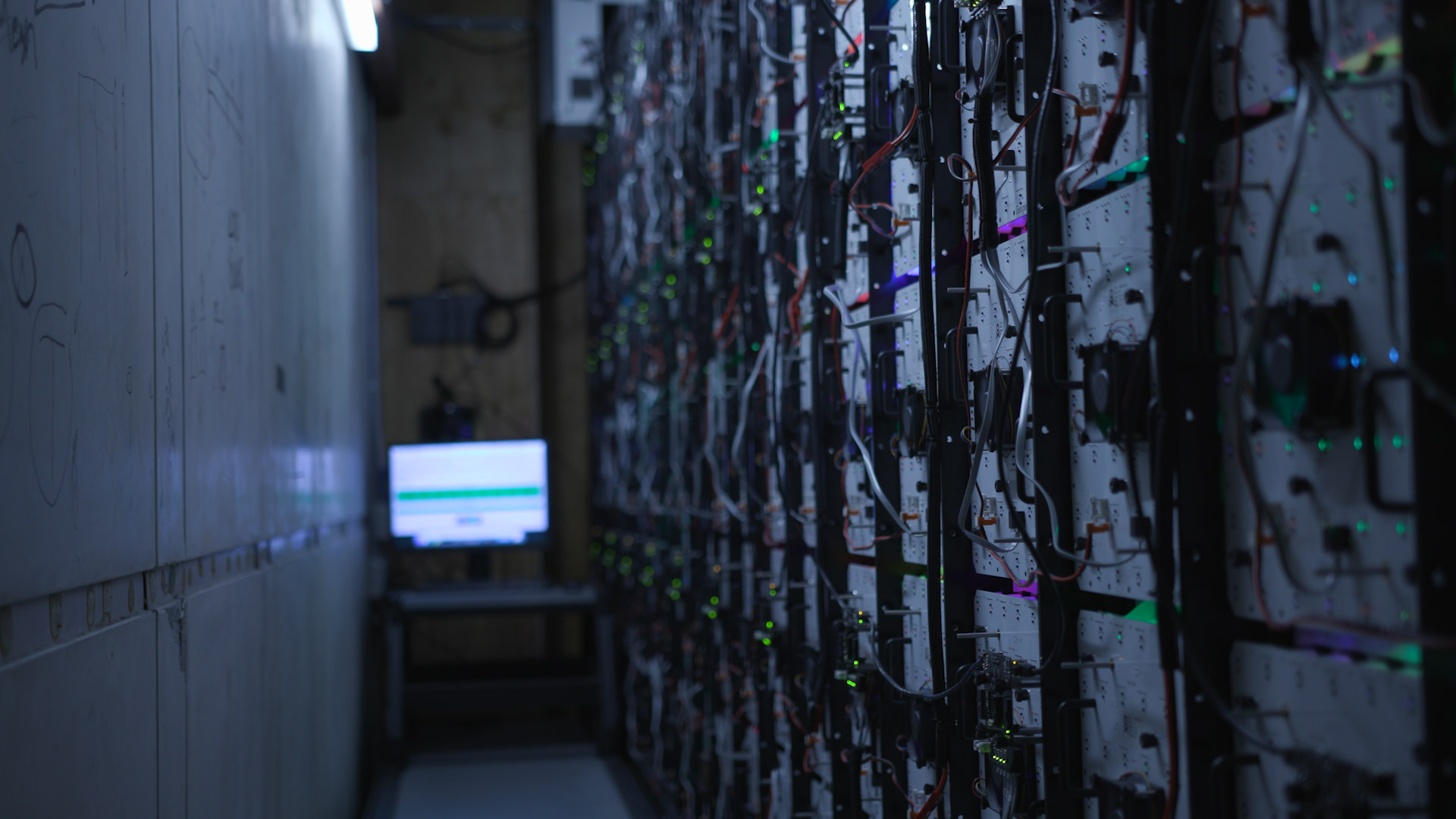
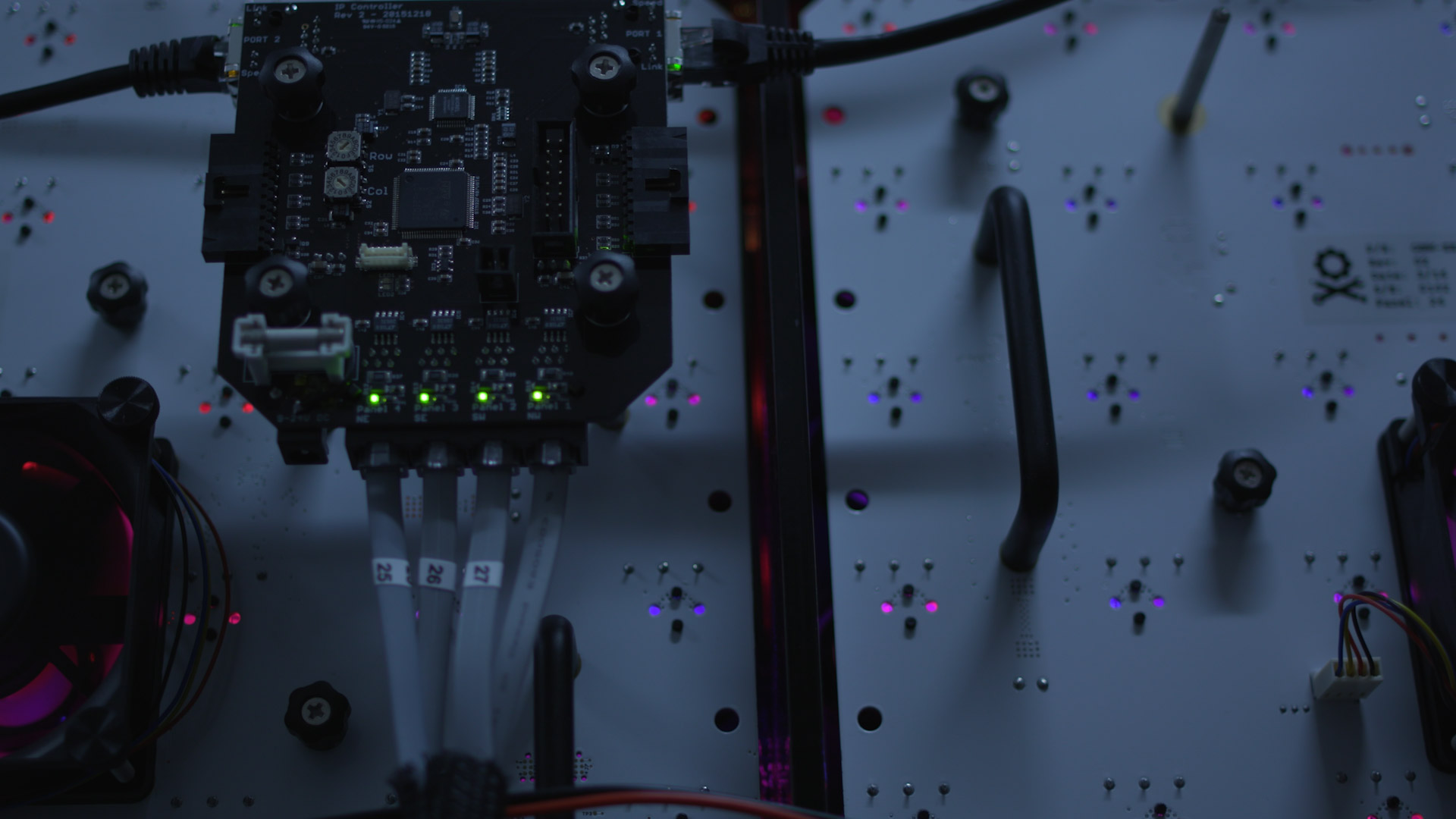
At the heart of Anypixel is a custom-designed PCB that coordinates power distribution, LED brightness control, and button state across hundreds of buttons simultaneously. We worked with Deeplocal to make this production-ready. Boards were designed using EAGLE schematics, with STM32 microcontrollers running custom C firmware. The system is modular — each board handles a subset of buttons, and boards chain together to form the full 5,880-button display.
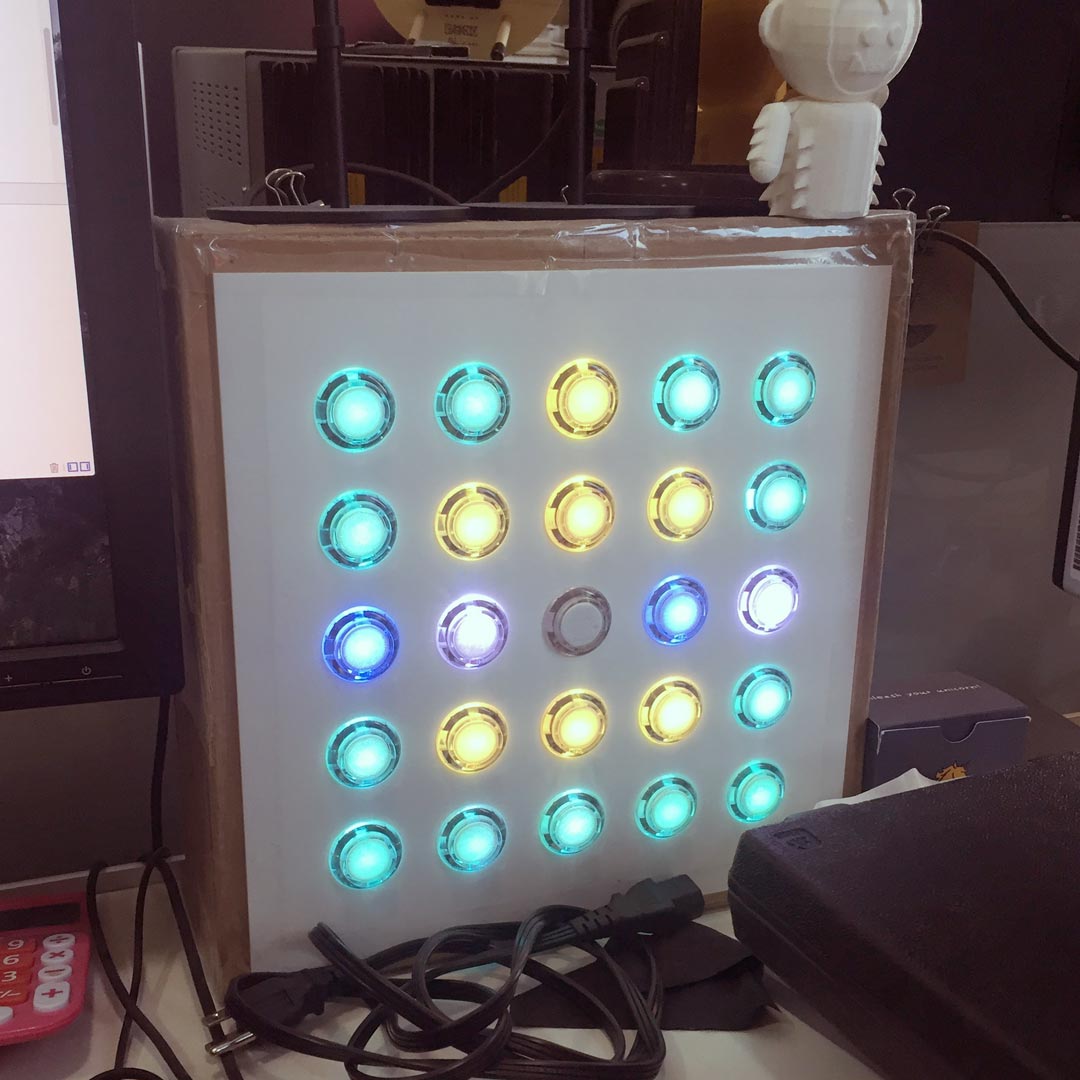
Several of these walls have been fabricated around the world, Google has built curved ones for global events, hobbyists have shared their own as have universities.
The Framework
To make the wall programmable by anyone, we built AnyPixel.js — an open-source software and hardware library written in JavaScript. The framework abstracts the physical hardware behind an HTML canvas-style API. A developer writes a web app that draws to a 140×42 canvas, and the framework handles translating those pixels into button LED states via a Node.js backend.
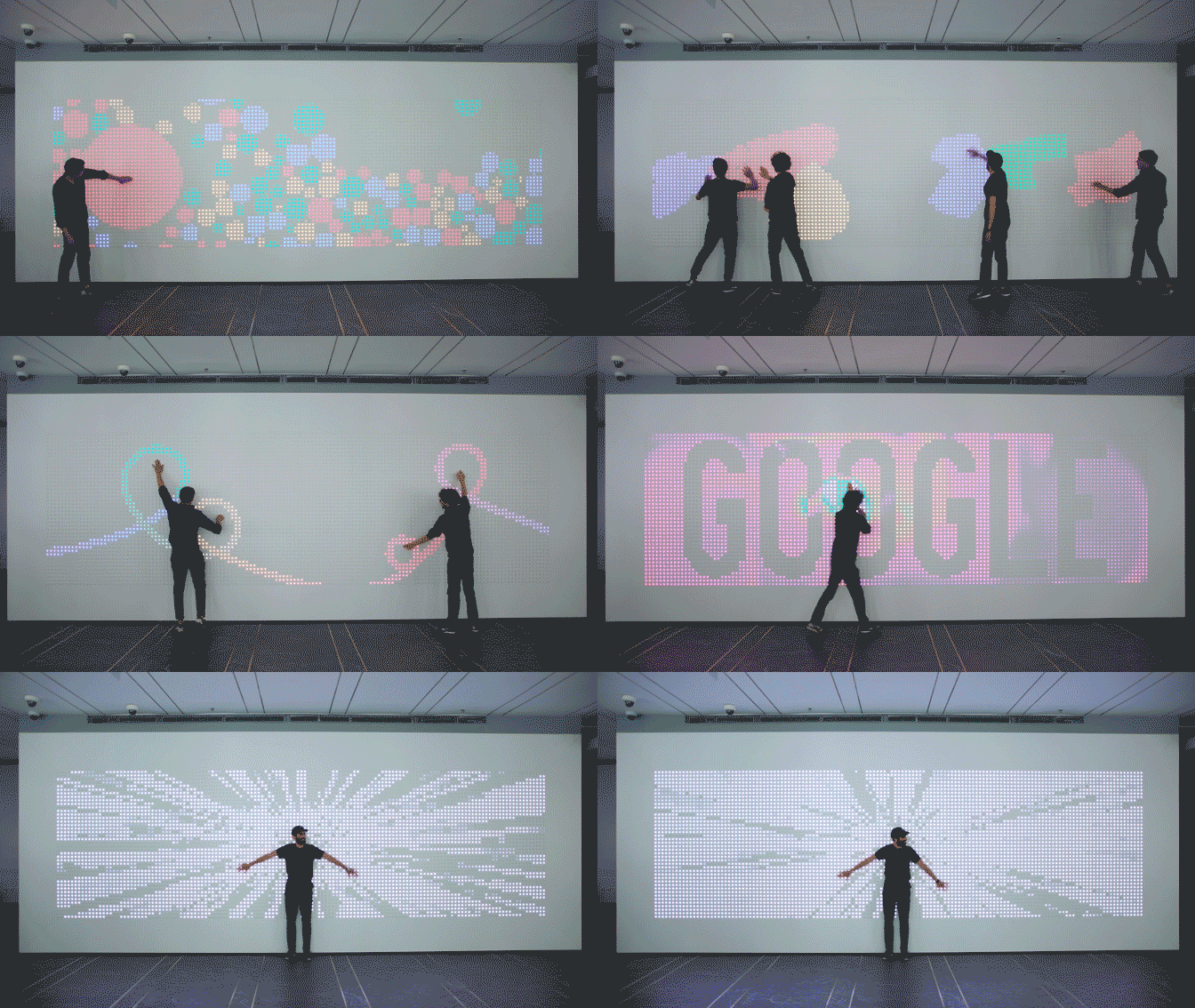
This meant anyone familiar with web development could create an interactive experience for the wall without needing to understand the underlying hardware. We shipped 11 demo applications with the open-source release, including:
- Ball Pit — a physics simulation where buttons become bouncing particles
- Diffusion — a reaction-diffusion simulation spreading across the surface in real time
- Explosion — touch a point and watch a shockwave propagate outward
- Block Letters — press a region to stamp a giant letter across the display
- Rainbow — a flowing color gradient that responds to multi-touch
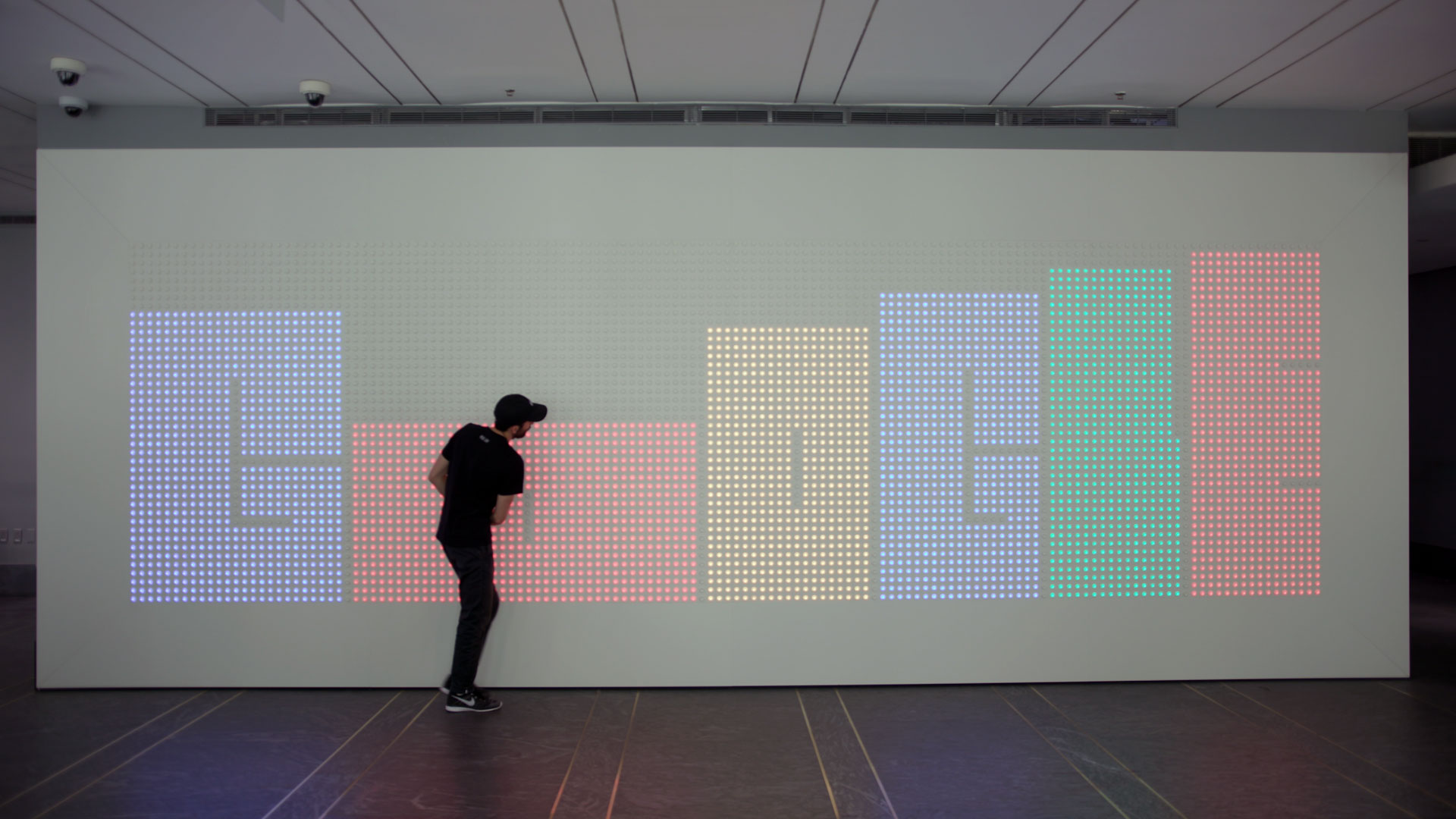
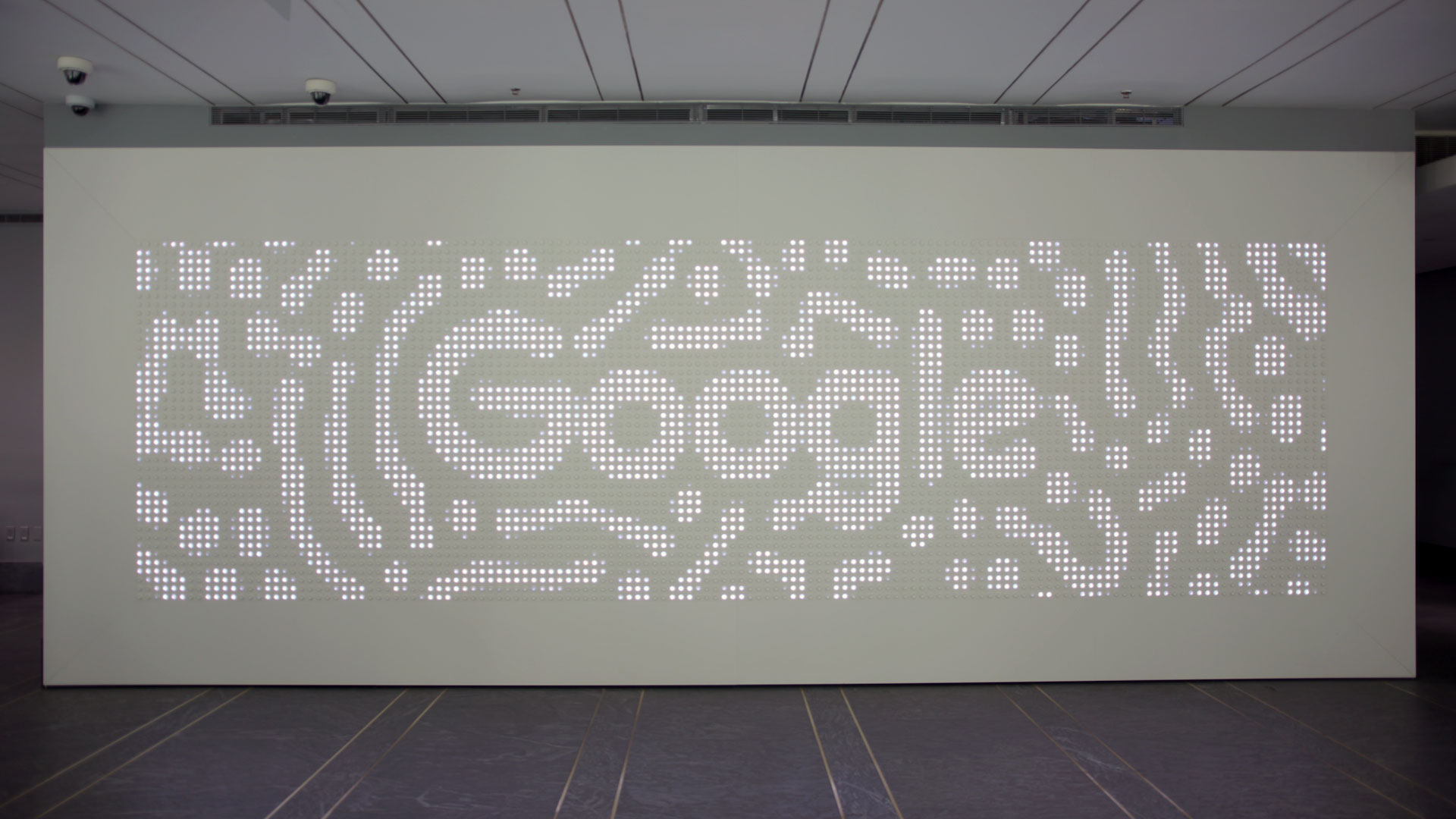
This philosophy of open-sourcing large-scale creative experiments is central to how Google Creative Lab approaches its work. Rather than letting the installation be a one-time artifact, we wanted to show how to use Chrome in a broader ecosystem of physical interactive displays.
The Wall as Interface
What made the lobby installation compelling was the social dimension. The wall lives in a public lobby. Strangers press buttons next to each other. Games emerge spontaneously. The display becomes a shared canvas with no single person in control. To this day it brings me such joy when I walk in to work and see others playing with it.
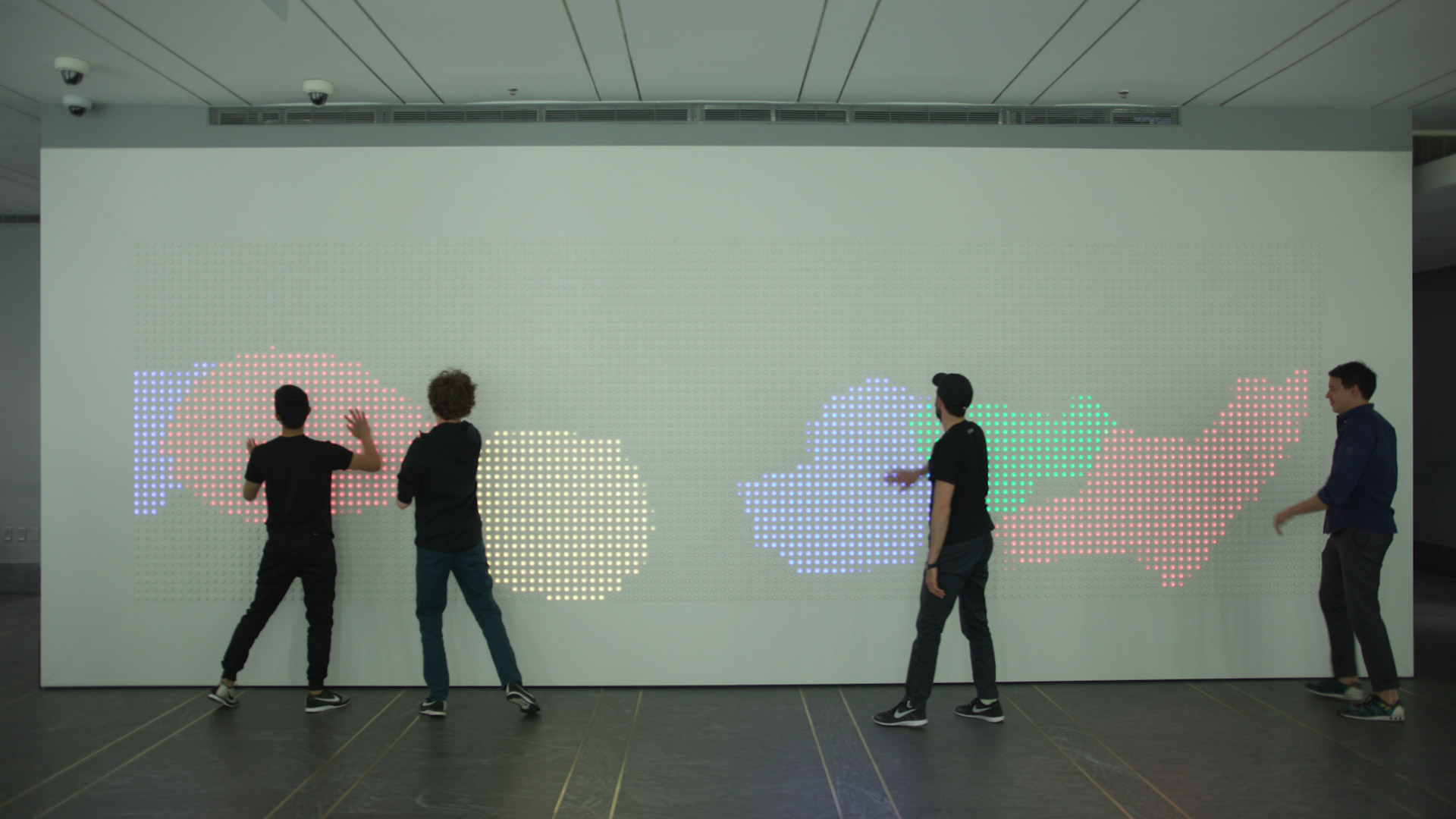
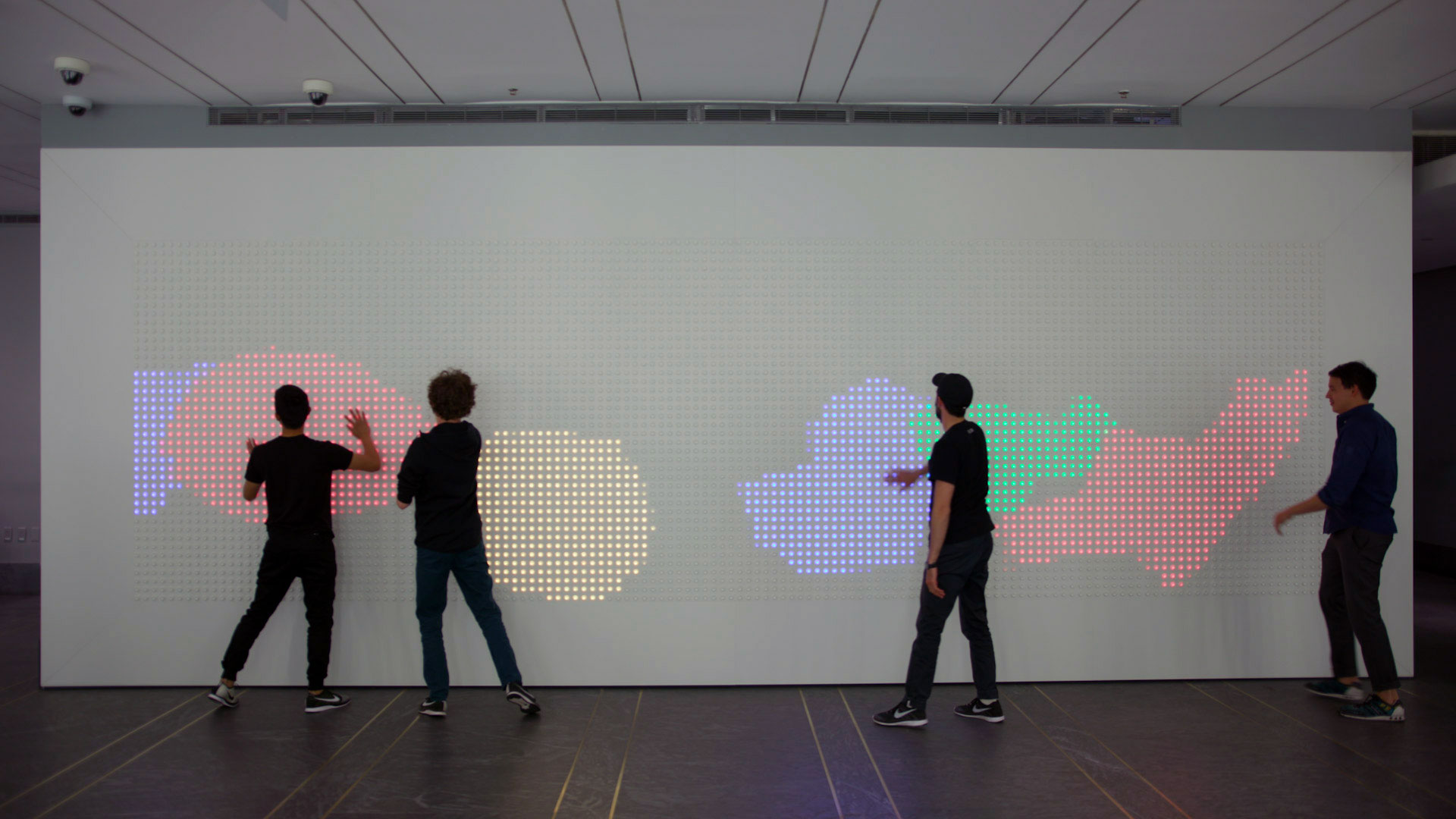
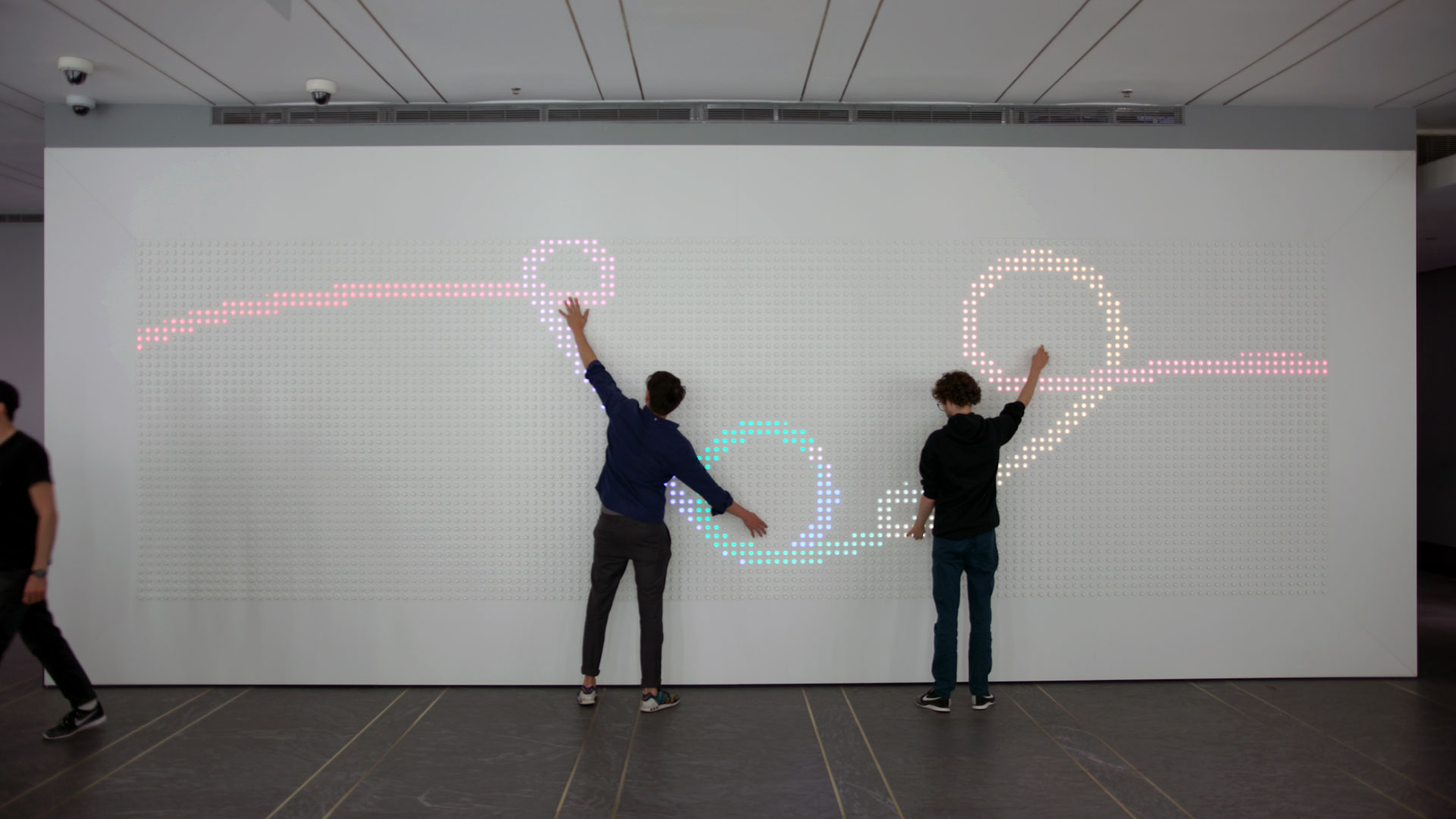
This quality — a display that invites collective, spontaneous authorship — connects to a thread running through much of my work: the idea that the best interfaces dissolve into the experience itself. In Teachable Machine, the complexity of machine learning disappears behind a webcam and a few examples. In Creatability, the computer fades behind body position and sound. With Anypixel, the technology behind 5,880 custom circuit boards fades behind the simple pleasure of pressing something and making it light up.
Supporting Materials
Awards
- SEGD Honor Award 2017
- FWA Adobe Cutting Edge
- Webby Technical Achievement 2017
Press
- Communication Arts
- The Verge
- Fast Co. Design
Team
- Richard The - Creative Director
- myself - Creative Technologist
- Jeremy Abel - Creative Technologist
- Patrick Miller - Creative Technologist
- App Developers: Nick Fox-Gieg, Manny Tan, Felix Woitzel, Anders Hoff, Dimitry Bentsionov, Nick Stahlnecker